Reliure de Livre: Loving Books as Babies


Reliure de livre dari dalam (personal documentation)
… loving books is not only understanding their content, but also respecting their bodies …
By Benny Arnas
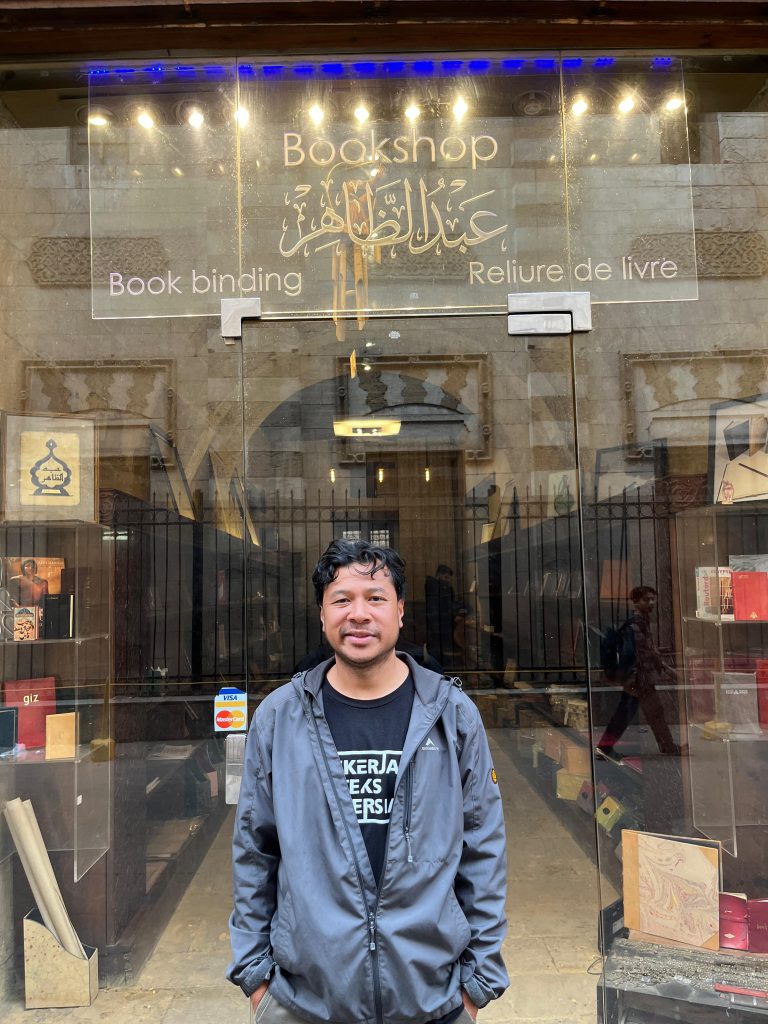
That afternoon, shortly after zuhr, Alif, my residency companion during my stay in Cairo, suddenly asked me to turn into a small shop with a glass door in Darosah. I followed him without asking much because he gave me a subtle signal with his eyes, as if urging me to open the door. As soon as it moved, the smell of old paper and soft-evaporating glue greeted me. It felt as though I wasn’t entering a store, but stepping into a passageway of time.
Behind a glass-topped wooden table, a young man stood to welcome us. His name was Youssef Abdelzahers. He had the appearance typical of a light-skinned Arab. His mustache was brownish-blond, matching his neatly trimmed short hair. He wore a black hoodie, and the first thing that caught my attention was his beard, surprisingly full for someone his age. Under the shop’s dim light, he appeared both relaxed and dignified.
Youssef introduced himself as a student at Modern University For Technology & Information (MTI). He was only nineteen, but the way he stood and spoke made the place feel like a home passed down through generations of book lovers.
Without waiting for me to initiate conversation, Youssef pointed at a small sign hanging above the door. “Reliure de livre,” he said with a smile. “Bookbinding. My family has run this place for generations.” When I asked which generation he belonged to, he answered simply, “Fourth.”
Our conversation drifted into the world of bookbinding. At first, I thought bookbinding was nothing more than gathering blank pages into covers, just like my daughters do when making their journals. I was completely mistaken.
Youssef explained that bookbinding consists of thirty-eight separate stages. He moved his hands as though drawing the steps in the air. “We even bound Description de l’Égypte, the Arabic edition,” he added, showing its digital pages on his phone. Looking at them, I felt as if I were touching history with my fingertips.
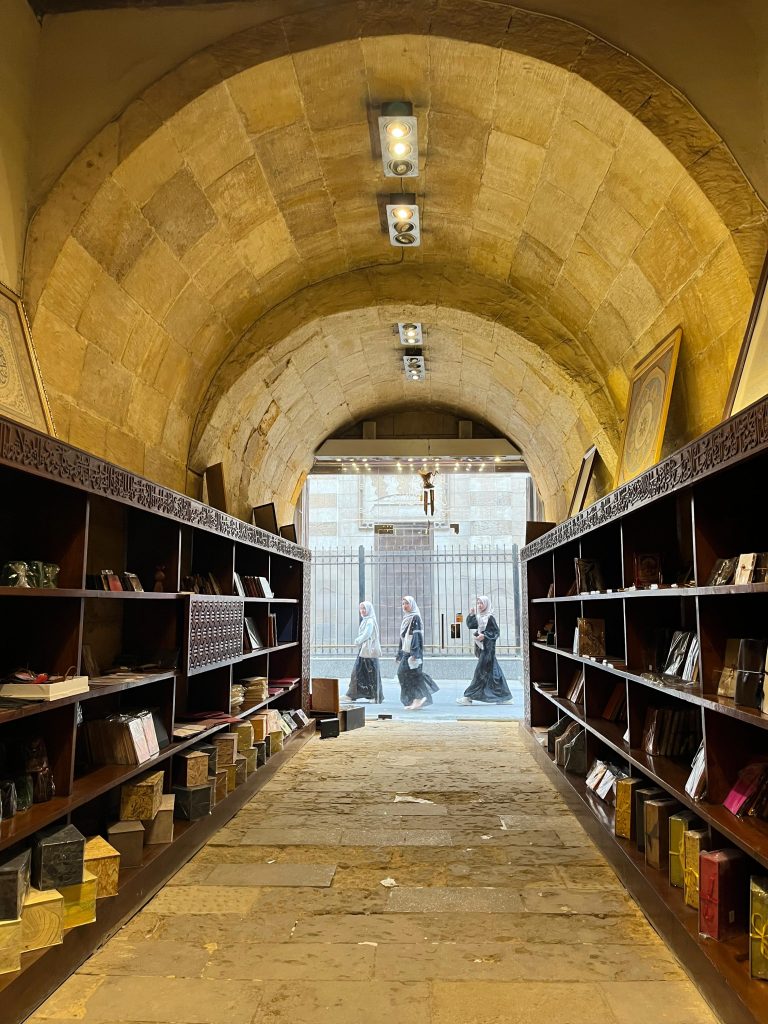
He told me that he had been drawn to this traditional craft since the age of five. Imagine a small boy who could barely read fluently but was already familiar with glue, needles, thread, and paper. There is a simple yet profound beauty in that. It was as if his love for books grew even before his ability to read.
“I read a lot between the ages of seven and fifteen,” he admitted. His tone made it clear how important those years had been to him.
That age range is indeed a golden period for reading development. Research on the home literacy environment shows that children who grow up surrounded by books develop more stable and long-lasting language and reading abilities. Parents reading stories aloud, conversations about books, and the simple presence of accessible reading materials create a safe space for a child to grow into a lover of knowledge. Longitudinal studies even suggest that such exposure predicts academic ability well into adolescence and adulthood.
At that point, Youssef was no longer just a bookbinder. He was the result of a home that valued books as a natural part of life.
I was also reminded of a few underrated figures whose childhoods were similar. Pablo Neruda, for instance, grew up in a small house filled with magazines and books left by his late mother. He once wrote that those books made the world feel bigger than the tiny town he lived in. In Indonesia, Ahmad Tohari’s experience echoed this. His father’s small library held classical Islamic texts and folk stories, and young Tohari read whatever he could reach, including books he did not yet fully understand. In an interview he once said, “Each page invited me to walk a little farther.” That sentence captures the essence of a true young reader.
When I asked Youssef what role he held in the shop, he smiled. “I do all stuffs!” he said casually. He enjoyed all the processes. “I like doing everything, feeling the process, not just managing it as a business.”
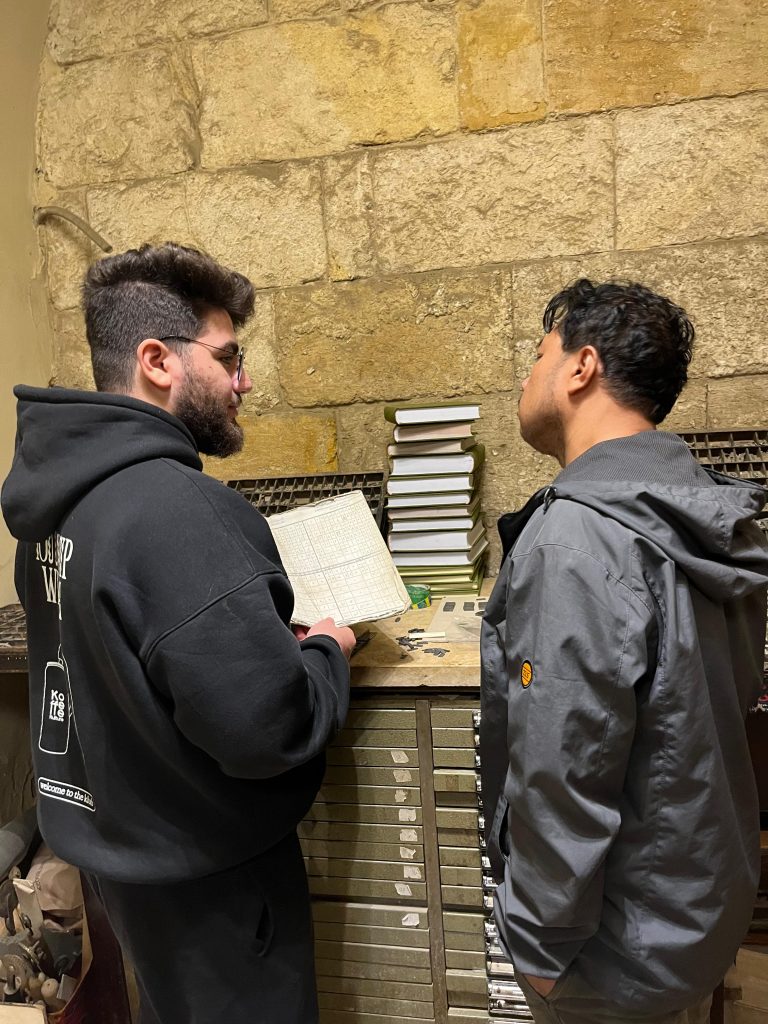
He then invited me to the next room. It was a small space with shelves holding tiny boxes. Inside them were metal letter stamps. The Arabic letters were incredibly small and intricate. Some stamps had single letters, others held combinations like ‘ain and mim in one imprint. “I needed two weeks to memorize which one goes where,” he said. His precision fascinated me.
In that room, one of Jorge Luis Borges’ lines drifted naturally into my mind: “I have always imagined that Paradise will be a kind of library.” For Youssef, that sentence wasn’t a metaphor. He lived inside it.
Another thought crossed my mind, this one from the Japanese writer Zako Abe: “Books do not change the world, but they change the people who will change the world.” On Youssef’s face, I could see the possibility of that idea taking form.
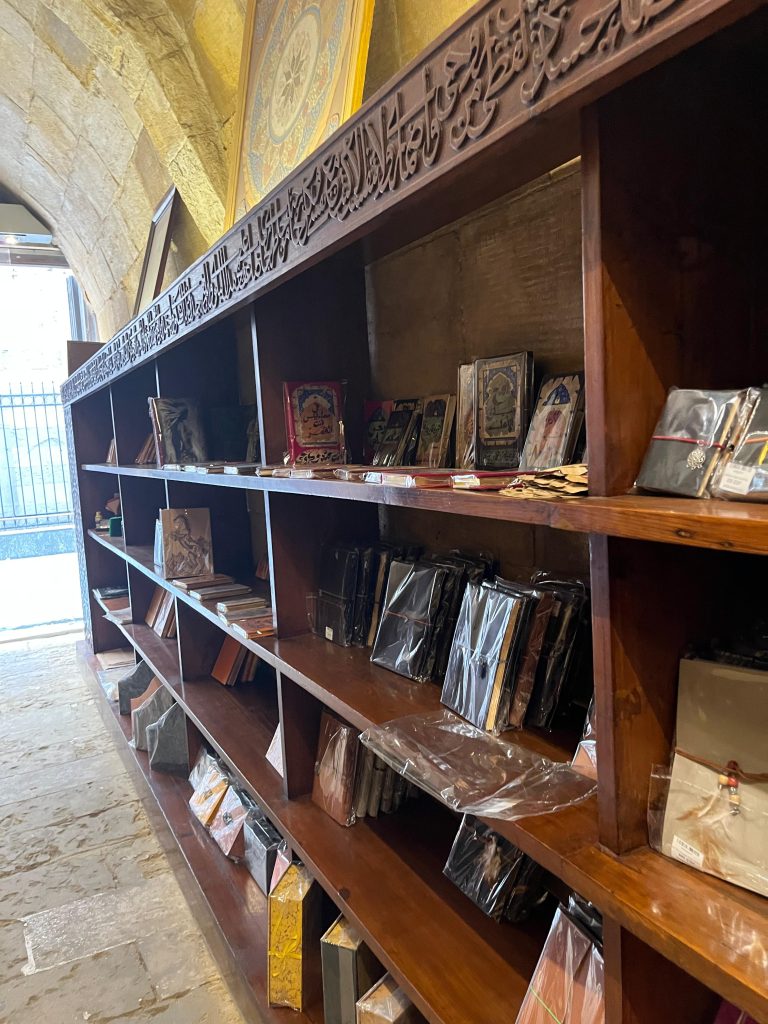
Seeing all this, I suddenly remembered my own books. Their covers peeling. The glue dried. Pages easily falling out. Paper turning yellow. I felt embarrassed, as if I had been using books without caring for them.
A sense of envy crept in. Envy toward this little shop. Envy toward the family that treated books as living things. Envy toward the attention they gave to each page.
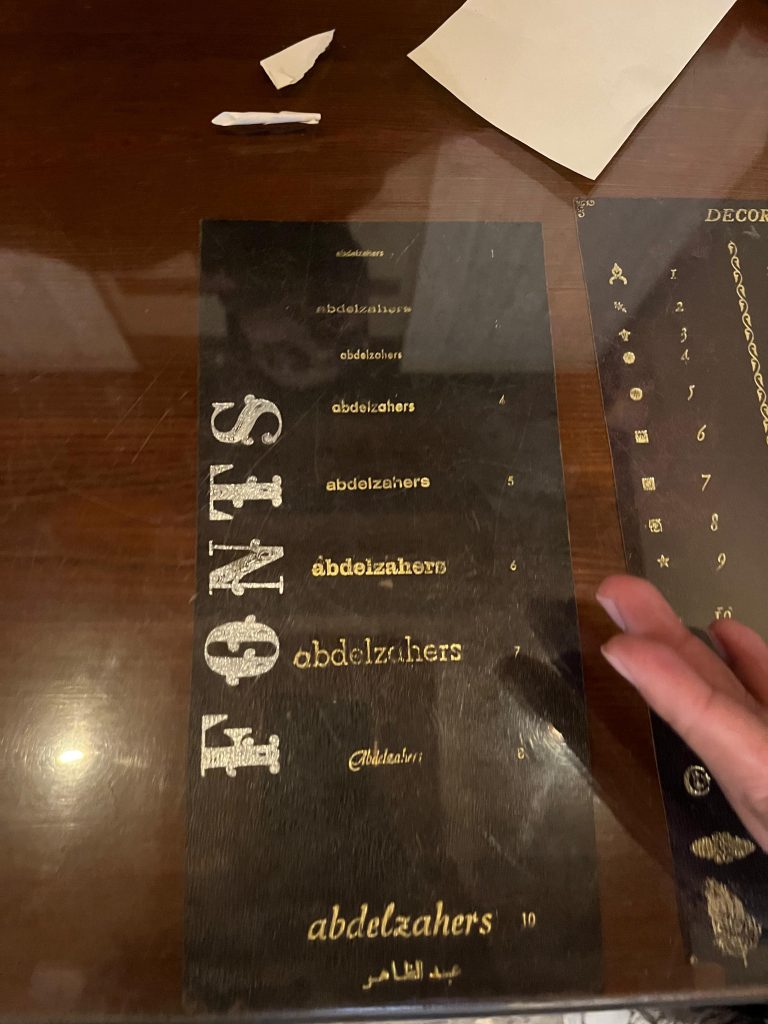
When I was about to leave, Youssef said softly, “They are fragile, but they make us larger.” He tapped the cover of a small volume gently, like patting the head of a sleeping baby. “I see them as my babies,” he said.
As I stepped out with Alif, I borrowed his line and turned it into a question for myself. Have I loved knowledge the way one loves a child? Have I provided time, space, and care to nurture it, not merely consume it for short-term purposes?
Cairo felt different that evening. Soft light glowed against the old buildings, and the scent of spices rose from the streets. I walked slowly, carrying one simple yet profound lesson: loving books is not only reading them but caring for them. Not only understanding their content, but also respecting their bodies.(*)
Cairo, 15 December 2025
⸻
References
BIRCU Journal. (2023) The Impact of Home Literacy Environment on Reading Motivation in Middle Childhood. Available at: https://bircu-journal.com/index.php/birci/article/view/7794 (Accessed: 15 December 2025).
Borges, J.L. (n.d.) I have always imagined that Paradise will be a kind of library. (Widely circulated in literary culture; no primary source available.)
Wikipedia. (2024) Description de l’Égypte. Available at: https://en.wikipedia.org/wiki/Description_de_l%27%C3%89gypte (Accessed: 15 December 2025).
Wikipedia. (2024) Emergent literacies. Available at: https://en.wikipedia.org/wiki/Emergent_literacies (Accessed: 15 December 2025).
